Do you get that knot in your stomach at the thought of your dog or cat being refused boarding at the last minute? We’ve broken down all the conditions for traveling with a pet on French bee—from the ticket price to the exact dimensions of the carrier bag. Check out our practical tips to avoid unpleasant surprises and ensure a smooth flight for your loyal companion! 🐾✈️
We break down in-cabin travel with French bee 🐾
Once you’ve packed your own bags, it’s time to look at your four-legged companion traveling with you right under your feet.
A soft bag and a featherweight under the seat
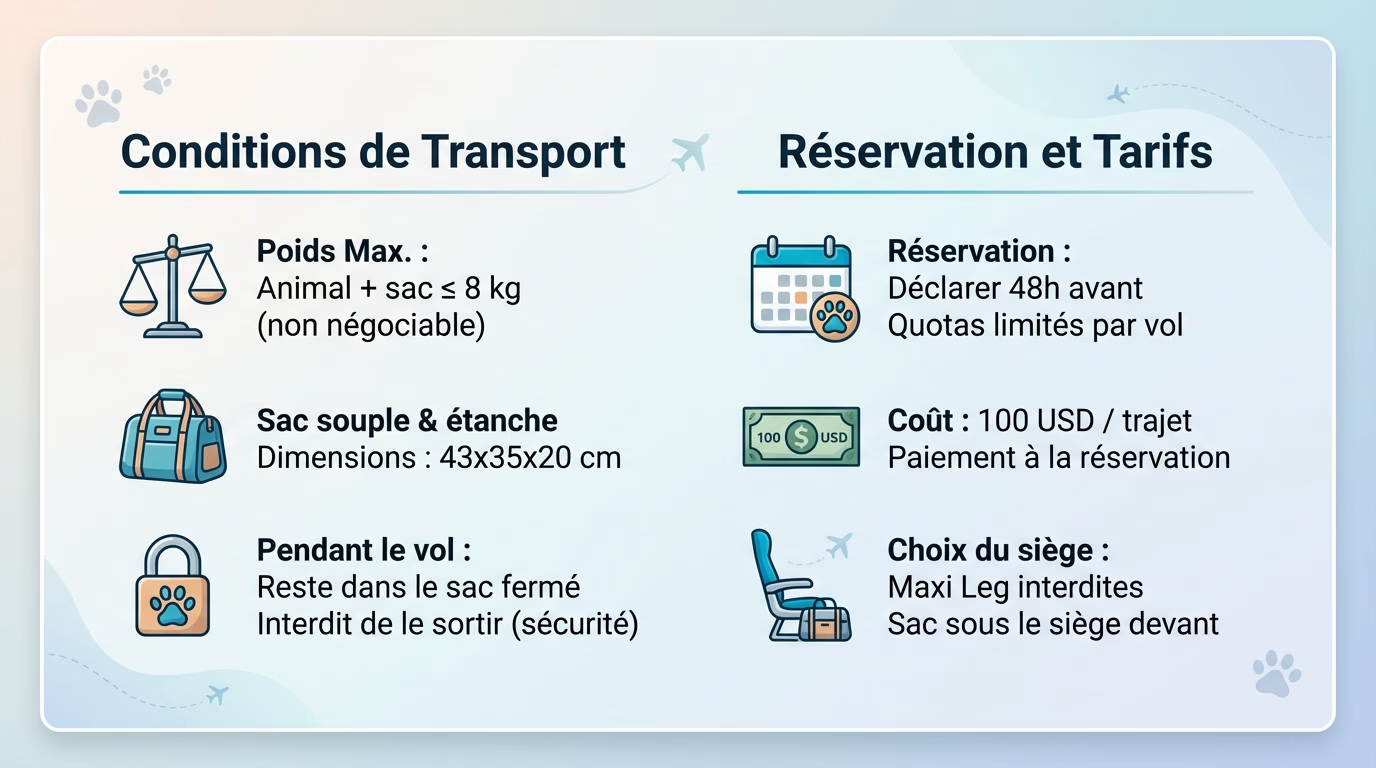
French bee doesn’t mess around with the scale—trust us. Your little furball and their bag must not exceed 8 kg in total. That’s the non-negotiable cutoff to stay in the cabin.
You must choose a soft, fully leak-proof bag. The maximum dimensions required are 43x35x20 cm.
Throughout the entire long-haul flight, your pet must stay calmly inside their closed bag. Absolutely no sticking their nose out, even for a quick cuddle. It’s a safety rule for everyone’s comfort. Keep the zip closed to avoid trouble.
Book their spot and pay the fee
Planning ahead is honestly your best ally here. We declared our pet well before the 48-hour deadline before departure. Spots on board are limited, so don’t play with fire.
Budget-wise, plan on a $100 USD flat fee per one-way trip. You usually pay it directly when booking.
Watch out for the seat-selection trap when you buy your ticket. Maxi Leg options are strictly forbidden with a pet. The bag must go under the seat in front of you.
Be sure to check the French Bee baggage policy before you leave. It’s the perfect time to be ready.
What you need to know about traveling in the hold ✈️
If your pet exceeds the carry-on size limit, the pressurized hold becomes their travel space, with even stricter safety rules.
An approved hard crate for total safety
The IATA standard is the absolute reference. Choose a rigid plastic or fiberglass crate, well ventilated, where your pet can stand up. Double-check the fastenings before heading to the airport for check-in.
We always secure the door with “zip ties”. It’s a seasoned traveler’s trick to prevent any accidental opening during handling—sometimes not exactly gentle—by baggage handlers.
| Criteria | In-cabin travel | Travel in the hold |
|---|---|---|
| Max weight | 8 kg (bag included) | 75 kg (crate included) |
| Container type | Soft bag | Hard crate (IATA) |
| Fee per one-way trip | 100 USD | 195 USD |
| Location | Under the seat | Ventilated hold |
| Access during the flight | Yes | No |
Managing the journey and short connections
Stopovers require extra vigilance. French bee requires a transit time of under two hours; otherwise, transport in the hold is often refused. The fee is $195 USD for this secured travel.
To get a sense of the setup, take a look at French Bee’s aircraft. The area is pressurized like the cabin, so your pet won’t suffer from a lack of oxygen.
Paperwork in order and banned breeds at takeoff 📋
Beyond the practical logistics, it’s the administrative and health side that can keep our pet grounded if we’re not careful.
The medical file to avoid unpleasant surprises
The European pet passport is our essential golden ticket. The microchip identification must be readable. Without these, we would be systematically refused boarding at the counter.
The rabies vaccination must be up to date. We carefully checked the legal timeframes depending on the final destination. This is critical.
A certificate of good health is required. It must be less than seven days old. We asked our vet for it right before the big departure to stay within the rules.
Here are the documents we had to gather:
- European pet passport
- Up-to-date vaccination record
- Health certificate less than 7 days old
- Proof of microchip identification
Brachycephalic dogs and category rules
Flat-nosed breeds face major restrictions. Boxers, Bulldogs, or Persians often suffer from breathing issues at altitude. French bee strictly bans their transport to avoid any life-threatening risk. It’s an essential animal-welfare measure in flight.
Category 1 attack dogs are banned. No exceptions are possible for these animals. That’s the strict rule.
For category 2, insurance is mandatory. We presented our third-party liability certificate at check-in.
Double-check your dog’s breed. Some crossbreeds may also be refused by the airline.
Destination-specific details and our small tips 🌍
To wrap up, keep in mind that the sky isn’t the same everywhere, and each territory sets its own health barriers.
From the USA to Tahiti, the rules change radically
The United States requires the CDC Dog Import form. It’s a mandatory online process. Without this validated document, your dog won’t be able to clear U.S. customs.
Tahiti is a no-pets destination. French bee does not accept any transport to or from Papeete. It’s absolute.
Your pet’s age matters a lot. For the USA, the minimum is six months. For other flights, eight weeks is generally enough to travel legally.
Always check with the embassy. Health regulations can sometimes change very quickly from one month to the next.
Preparing your pet for a long-haul flight
Training starts at home. Get your pet used to their bag several weeks in advance. They need to feel safe and calm in it. Put treats or their favorite toy inside to create a lasting positive association.
Sedation is strongly discouraged by vets. Medication can cause dangerous drops in blood pressure. Choose natural options instead, like pheromones or calming herbs.
Manage feeding before the flight. A light stomach reduces the risk of nausea on the plane.
In short, for French Bee promotion here and Book your plane ticket at the best price.
Between sticking to the 8 kg limit in the cabin and using a hard crate in the hold, we’ve seen that traveling with a pet on French bee takes careful preparation. Remember to book 48 hours before departure to secure this trip. Your companion is now ready for a smooth flight toward the sun! ☀️
Book an activity in Réunion
Compare the best tours, boat trips, guided hikes, and activities in Réunion before booking.
This post is also available in:
 Français (French)
Leave a Reply