Dear readers, lovers of adventure and travel,
This time, let me take you on an unforgettable Peruvian adventure: a four-day journey on the mythical Inca Trail, a trek that leads to Peru’s sacred treasure, Machu Picchu.
Inca Trail Preparations:
🧭 We only booked less than a month in advance, even though we later read and heard that some people book months ahead – it certainly depends on the time of year, so we recommend you check thoroughly. Indeed, access to Machu Picchu is limited to 5,044 people per day, across all agencies and tours.
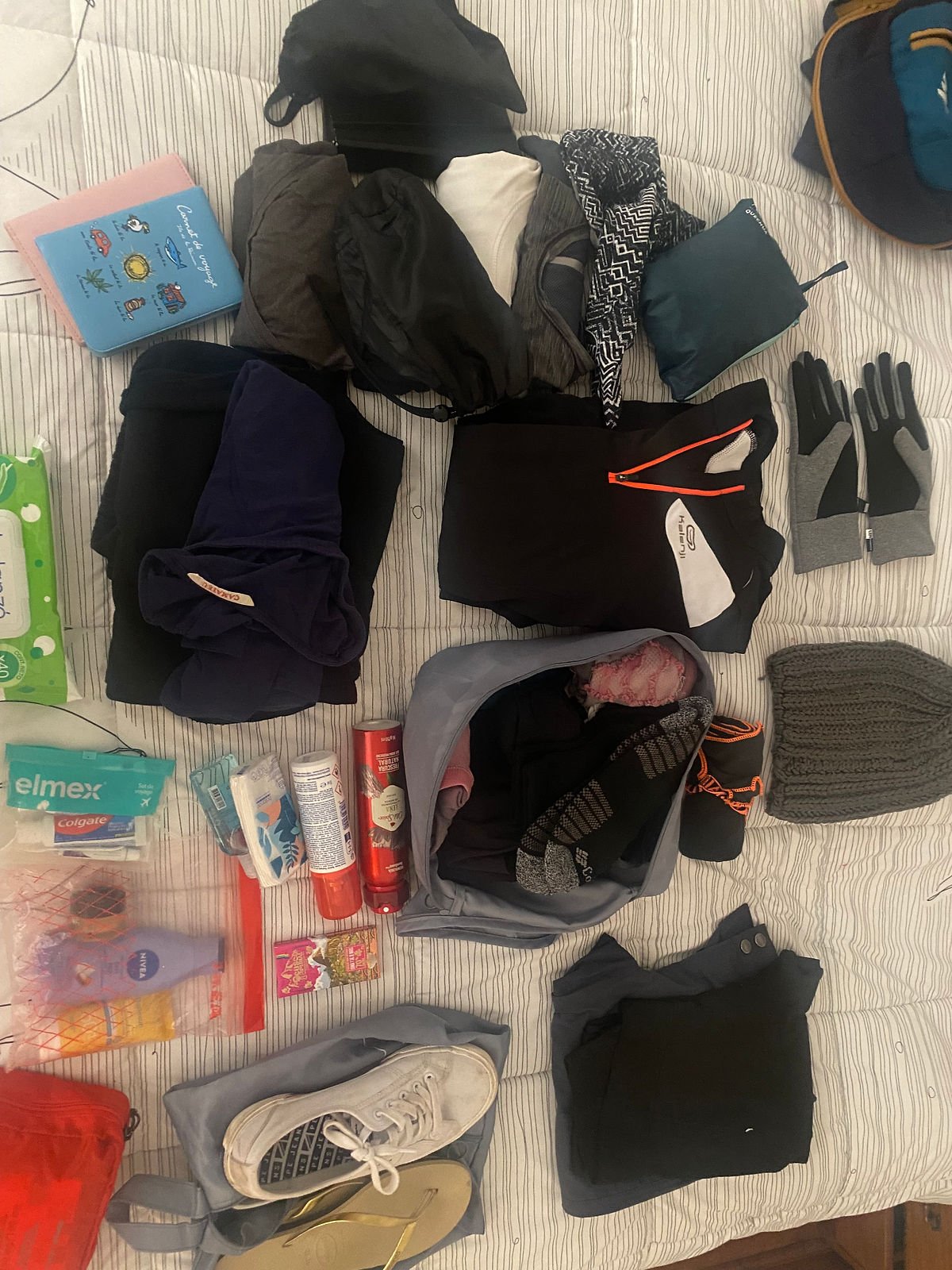
📈 The day before departure, we all met at the end of the day at Alpaca Expeditions’ offices (located in downtown Cusco) for the briefing. It was then that we met our future hiking companions for the first time! The warm welcome from our two guides, with coca tea, already set the tone for what was to come! We reviewed the four-day hiking program, the elevation changes, the Inca sites we would cross, and checked all the logistics. Finally, we each collected our bag for the porters. We were allowed 7kg each in this bag, which is carried to the different campsites by professional porters. It contains our change of clothes, flip-flops, sleeping bag and pillow, and toiletries. As for us, we carry our daypack, which must be as light and smart as possible. For our part, Guillaume had the photo/video equipment, and we had brought sunscreen, beanies, buffs, caps, gloves, water, and lip balm!
🎒 Day 1 Inca Trail: The beginning of an epic adventure:
KM 82 – QHANABAMBA – LLACTAPATA – WAYLLABAMBA – AYAPATA (14 kms)
Our journey began in Cusco, a city vibrant with history and culture. The Alpaca Expeditions bus picked us up from our accommodation around 4 AM. We picked up each hiker and headed towards Km 82 for breakfast, to meet the porters, and to leave our bags with them. After a detailed briefing and a final check of our backpacks (don’t forget your ÖKO filter water bottle, energy snacks, and a good pair of hiking shoes!), we were ready. The first day was a gentle climb towards the Wayllabamba camp. The air was filled with excitement and anticipation. The path wound through lush forests, and each step seemed to bring us closer to the ancient history of the Incas. We then walked for about 6 hours with various breaks at Inca sites, viewpoints, and to meet locals, drink craft beer with them, and of course, we chewed coca leaves to combat the effects of altitude!
Arriving at the campsite at the end of the day, all the tents were already set up, the spot was magnificent with an incredible view of the mountains facing our tents!
🏔️ Day 2 Inca Trail: The ascent of Dead Woman’s Pass
LLULLUCHAPAMPA – WARMIWAÑUSCA – RUNKURAKAY – SAYAQMARKA (16 kms)
The second day of the Inca Trail is undoubtedly the most difficult in terms of physical effort, requiring a long and significant ascent to climb the famous Dead Woman’s Pass. Culminating at 4,200 meters (13,780 feet) of altitude, each breath was a challenge, but the view from the summit was an unparalleled reward. We were very lucky with the weather as it was neither too hot nor too rainy! Although the ascent is significant, it remains, in our opinion, relatively accessible because the guides adapt very well to the group’s walking pace, and we all have the opportunity to walk as we wish and according to our fitness level. The time indications are quite broad; overall, we walked for less time than indicated each day. However, one of the participants was having more difficulty, and the guides adjusted the route and walking times for him. On this second day, we appreciated our walking poles more than ever!
🥾 Day 3 Inca Trail: Discovering the Inca ruins
INTIPATA – PATAMARCA -CHEQUIPO (10 kms):
The third day was a mix of small ascents and descents, but what made it special were the Inca sites we discovered along the way. Runkurakay and Sayacmarca were architectural gems, windows into an ancient world. In the evening, the Phuyupatamarca camp offered a spectacular starry sky, a perfect backdrop to reflect on our journey so far. It seemed to us to be the least difficult day of the trail. Ultimately, we only walked until early afternoon, with regular breaks at the various Inca sites. The afternoon was free; we went to discover a waterfall and other Inca ruins.
🌅 Day 4 Inca Trail: Arrival at MACHU PICCHU!
WINAY WAYNA – MACHU PICCHU (5kms)
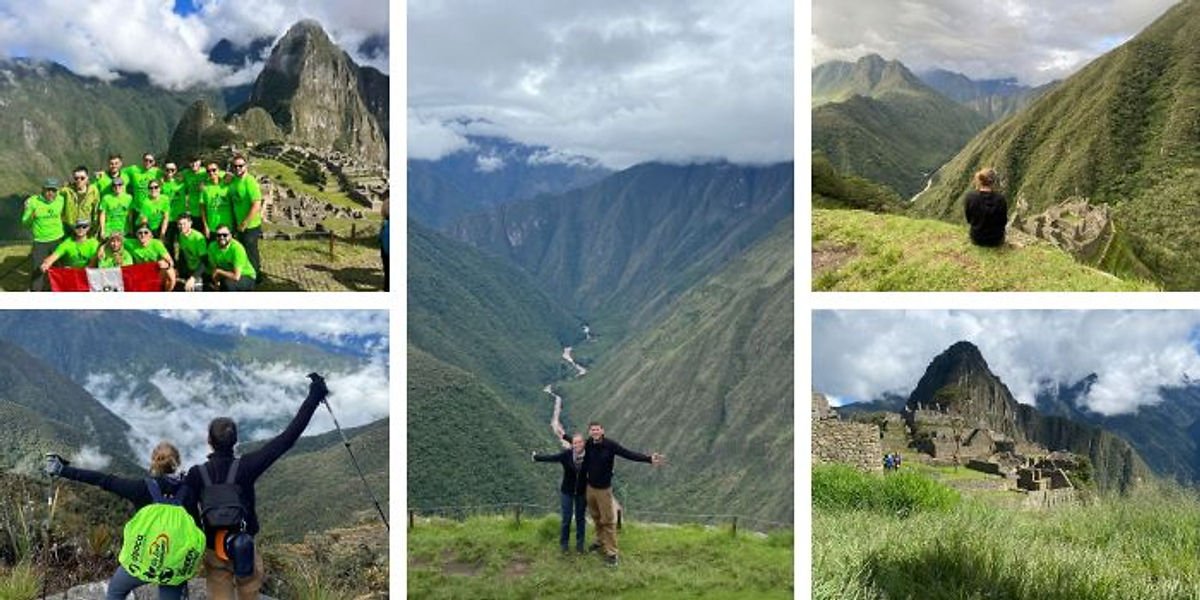
On the last day, we woke up before dawn, eager to reach our destination. The path led to Intipunku, the Sun Gate, from where we first saw Machu Picchu in the morning light. It was a magical moment, the blend of morning mist and the first rays of sun illuminating the Inca citadel.
Waking up at 3 AM to be among the first at the Sun Gate: the goal was achieved and rewarded! This last morning of walking on the Inca Trail was challenging, even though it wasn’t particularly physically demanding, but we were all quite tired from our last three days of walking, nights in tents, and very early mornings… The path to the Sun Gate is rather flat until the arrival, which includes high, irregular steps that seemed endless and put our nerves (and our thighs!) to the test! We arrived there in the early morning, among the first visitors, then spent the morning exploring this enigmatic site: a dream come true!
After the guided tour of the site, we went down to Aguas Calientes by bus and enjoyed a great moment of conviviality with our group at the restaurant, for a last meal before returning to our respective lives. We extended the celebration into the train ride back to Ollantaytambo, then the Alpaca Expeditions bus dropped us off in Cusco.
Our Inca Trail Experience Review:
🥲 This is undoubtedly one of the most memorable experiences of our adventure: self-transcendence, renunciation, perseverance and courage, memorable laughter with people from all over the world, a complete immersion in a culture completely unknown to us, all cradled by breathtaking landscapes, every day! This trek on the Inca Trail was more than just a hike. It was a journey through history, culture, and the stunning landscapes of Peru. An experience that remains etched in our memories and touches our hearts, a reminder of the grandeur of our world and the spirit of adventure that lies dormant within each of us. We recommend it to anyone traveling to Peru and who loves hiking to walk the mythical Inca Trail!
Practical Tips for the Inca Trail:
• Preparation: Start training several months in advance. Altitude can be a challenge, so plan to spend a few days in Cusco to acclimatize well and limit the effects of altitude.
• Equipment: Invest in good hiking shoes and a comfortable backpack. Don’t forget sunscreen, a hat, and layers of clothing to cope with temperature changes in your daypack. You can also rent walking poles on site.
• Environmental Respect: Stay on the trails and take all your trash with you. We are only guests of nature; our passage must preserve the beauty and sanctity of these places.
• Savor every moment: This journey is more than a hike; it’s a spiritual, historical, and human experience.
See you soon for new adventures!
FAQ about the Inca Trail to Machu Picchu
Q: Do you need to book the Inca Trail far in advance?
A: Yes, it is highly recommended to book several months in advance, especially during the high tourist season. Access to Machu Picchu and the Inca Trail is limited to a certain number of people per day to preserve the site.
Q: What are the essential preparations before starting the Inca Trail?A: Before you go, attend a briefing to learn about the program, hiking details, and to pick up the bag for the porters. Prepare a light backpack with essentials like sunscreen, hats, gloves, water, and snacks.
Q: What is the difficulty level of the Inca Trail?
A: The Inca Trail varies in difficulty. The second day, the ascent of Dead Woman’s Pass, is particularly demanding. However, guides adapt to the group’s pace, and the itinerary is feasible for hikers in good physical condition with adequate preparation.
Q: What is the best time to do the Inca Trail?
A: The best time to do this trail is during the dry season, from May to September. However, the trail is accessible all year round, with the exception of February, when it is closed for maintenance.
Q: What specific equipment is needed for the Inca Trail?
A: It is essential to have good hiking shoes, a comfortable backpack, clothing adapted to climate changes, a filter water bottle, and walking poles. You can rent some equipment on site if necessary.
Q: How to manage the effects of altitude on the Inca Trail?
A: To limit the effects of altitude, it is advisable to spend a few days in Cusco before the trail to acclimatize. Stay hydrated, eat light, and consider chewing coca leaves, as locals do.
Q: Can you meet local communities during the Inca Trail?
A: Yes, the trail offers opportunities to meet local inhabitants, share moments with them, and even taste craft beers or local dishes.
Q: How to respect the environment during the Inca Trail?
A: Stay on marked trails, take all your trash with you, and respect the sites and surrounding nature. Remember that you are a guest in these sacred places.
Q: What are the highlights of the Inca Trail?
A: Highlights include crossing Inca sites, ascending Dead Woman’s Pass, breathtaking landscapes, and the magical arrival at Machu Picchu through the Sun Gate.
Q: How does the last day of the Inca Trail and the visit to Machu Picchu unfold?
A: The last day starts early, with a walk to the Sun Gate for a first view of Machu Picchu at sunrise. After a guided tour of the site, the return is usually by bus to Aguas Calientes, then by train and bus to Cusco.
Book an activity in Réunion
Compare the best tours, boat trips, guided hikes, and activities in Réunion before booking.
This post is also available in:
 Français (French)