An overnight flight can make a long-haul trip much more pleasant… as long as you don’t wait until boarding to decide everything. With French bee, comfort mostly comes down to a few simple trade-offs: seat location, carry-on organization, meal timing, and what you bring to rest. Here’s a practical method for choosing the options that have the most impact, without paying for things you won’t use.
Preparing for your overnight flight
Before booking, check the schedules and the options actually offered on your route: it’s the best starting point for a stress-free comparison.
The seat: the first option to consider
When it comes to sleeping, the seat matters more than most accessories. If you’re tall, sensitive to a lack of space, or traveling as a pair, compare the location and space offered before confirming your booking. Choosing a seat in advance can prevent you from ending up near a high-traffic area or with neighbors less suited for resting.
It’s not an essential expense for everyone. On an overnight flight, it becomes more relevant if you know you have trouble sleeping while sitting up. Conversely, for a traveler who can fall asleep quickly, it’s sometimes better to save that budget for a hotel night or a transfer upon arrival.
To compare locations and find out when this option is worth the price, check out our French bee seat selection guide.
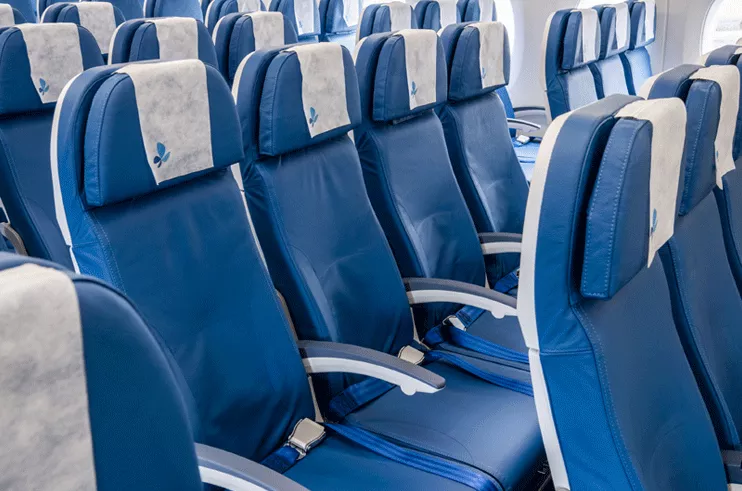
Visual: French bee, economy cabin.
Meals and timing: don’t let the cabin dictate your rhythm
The smart move is to plan your own rhythm before departure. Eat early enough if it helps you fall asleep, keep a bottle of water once you’re through security, and avoid having too many caffeinated drinks at the start of the flight. A simple snack in your bag can also be useful if the service schedule doesn’t match yours.
Depending on the fare and services selected, the catering offer may vary. Check what’s included when booking rather than relying on travel habits. Our article on French bee meals helps you prepare for this without any unpleasant surprises.
The carry-on bag that actually helps you sleep
- A sleep mask and earplugs—small but effective against light and noise.
- A light warm layer: the perceived temperature changes quickly when you’re sitting still.
- A neck pillow or compact cushion, if you actually use one normally.
- A power bank and headphones, stored in an easy-to-access pouch.
- A minimal change of clothes to arrive feeling fresher after a short night.
The idea is to keep these essentials under the seat without turning your space into a travel warehouse. For dimensions, allowances, and mistakes to avoid, find our French bee carry-on and checked baggage guide.
The right trade-off before paying for an option
Choose the seat first if you’re a light sleeper; then prioritize a well-organized carry-on bag. Extras are only worth it if they concretely improve your night or your arrival.
What’s not necessarily worth it
An overnight flight doesn’t turn into a hotel room, even with options. So avoid adding extras out of habit. If you never sleep on a plane, a more expensive seat won’t solve everything; instead, prepare for your arrival by limiting early appointments. And if you’re traveling light, bulky accessories can end up being more of a hindrance than a help.
For a broader view of the long-haul experience, also read our French bee long-haul review.
In summary: prepare, then choose wisely
On an overnight flight, the best investment is the one that suits your way of traveling: a better-placed seat if you need space, a precise carry-on bag, and an anticipated rhythm. Check the services available for your date and route, then only keep the options that will truly make your arrival smoother.
This post is also available in:
 Français (French)
Leave a Reply