When you start gearing up for a road trip in a van or SUV, one of the first big questions that comes up is sleeping arrangements. And there, the choice between an MH500 roof tent or an MH900 roof tent often comes up. These two Decathlon models each have their advantages, but meet quite different needs. So, how do you make the right choice between the sturdiness of a hard-shell structure like the MH500 roof tent and the ultra-fast practicality of the MH900 roof tent with its inflatable structure? We’re breaking it all down in this comparison to help you choose the one that best fits your travel style.
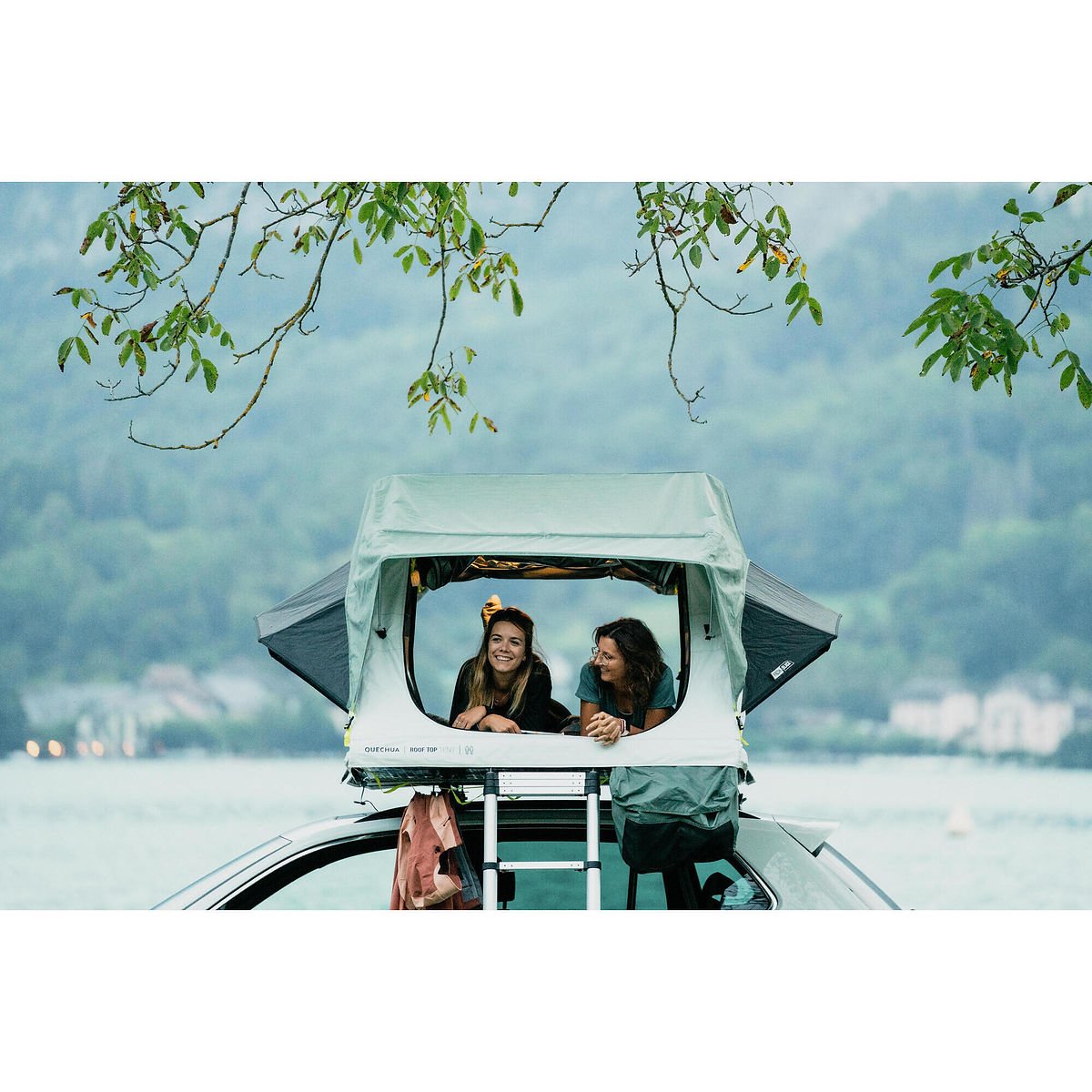
Why compare the MH500 and MH900?
If you’re hesitating between the MH500 roof tent and the MH900 roof tent, that’s completely normal: these two models are among the most popular at Decathlon, and each has its selling points. The MH500 roof tent focuses on robustness and versatility with a rigid structure, while the MH900 roof tent wins you over with its lightness and quick setup thanks to its inflatable system. Whether you’re more into long-haul road trips in variable conditions or summer getaways by the sea, your choice will mainly depend on your vehicle, your travel frequency, and the type of experience you’re looking for. We’re diving into the details just below!
MH500 or MH900: what are the main differences?
To help you see things more clearly, we’ve gathered the main features of both models here. This comparison table lets you visualize at a glance what sets the MH500 roof tent apart from the MH900 roof tent: dimensions, weight, setup, wind resistance… Everything’s here to make an informed choice!
Features | ||
Interior dimensions | 140 x 240 x 106 cm | 145 x 218 x 101 cm |
Total weight (tent + ladder) | 55.5 kg | 52 kg |
Setup type | Rigid structure – 5-min setup | Inflatable structure – 20-sec setup |
Wind resistance | Up to 60 km/h | Up to 60 km/h |
Average price | €1,350 | €1,500 |
At this point, the difference mainly comes down to setup and weight. The MH900 roof tent wins on speed and lightness, while the MH500 roof tent provides a more rigid and durable structure over time. But that’s just the beginning: let’s now see what each is worth in the field.
MH500 Roof Tent: for off-road adventurers
The MH500 roof tent is designed for those who like to get off the beaten path. With its rigid structure and solid materials (fiberglass and aluminum poles), it’s built to handle weather quirks, whether it’s wind, rain, or cooler nights. It sets up in barely 5 minutes and stays very stable once fixed on the vehicle roof.
Comfort-wise, it doesn’t disappoint: with generous interior dimensions (140 x 240 cm), it offers plenty of space for two adults. Its integrated mattress (139 x 237 cm, 5 cm thick) provides good support, perfect for recovering after a long day on the road or hiking. And like its inflatable sister, it benefits from Fresh & Black technology to block light and keep a comfortable temperature inside.
The MH500 roof tent is therefore an excellent option if you travel regularly, or if you’re heading out for several weeks, in areas where the weather can be unpredictable. It’s also particularly suited to van-type vehicles, 4x4s, camper vans, or combis, capable of supporting its weight and offering a large roof surface.
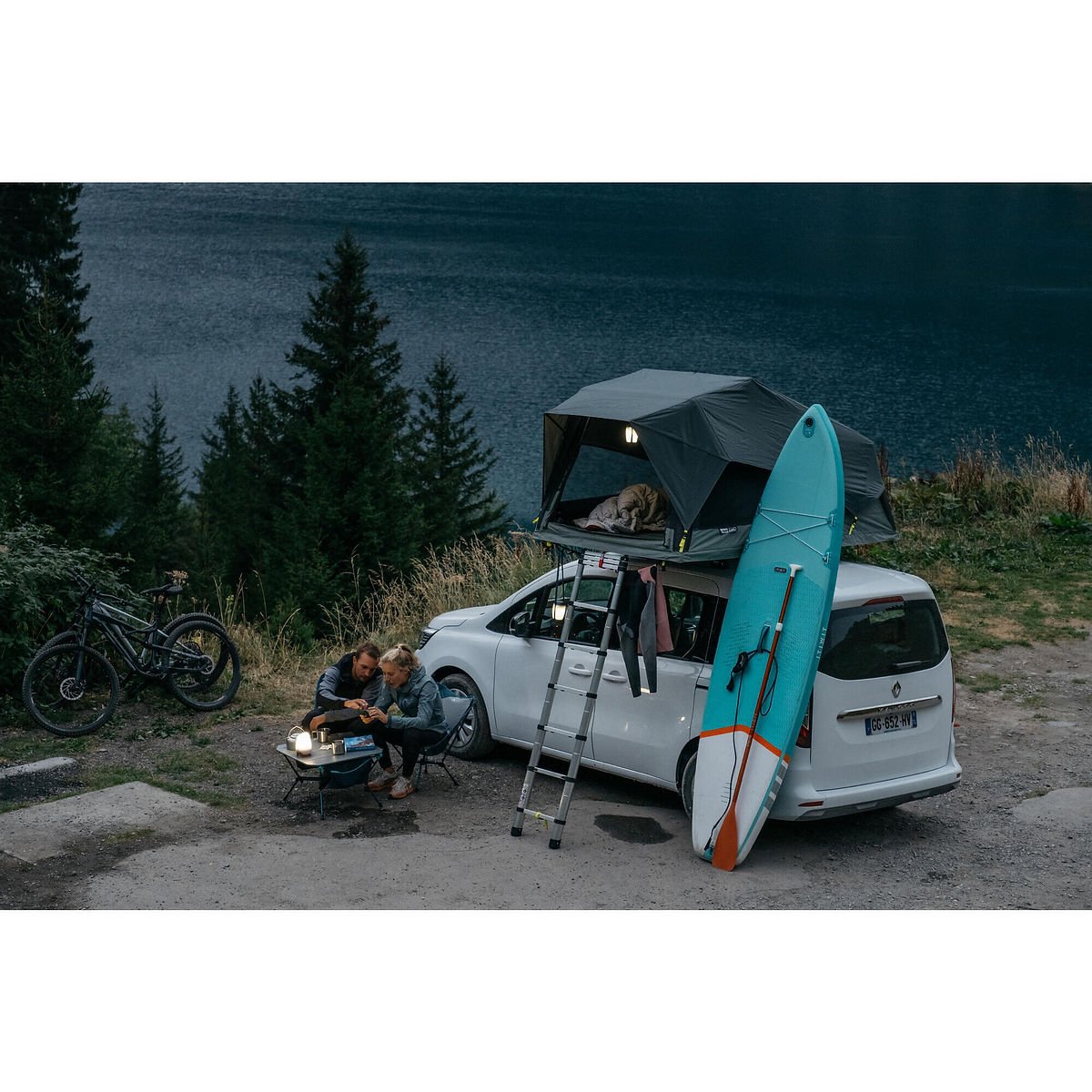
MH900 Roof Tent: for light and quick getaways
The MH900 roof tent has a weighty argument (or rather, a lightness one): its ultra-fast inflatable structure system. In just 20 seconds, you have a tent ready to use, without having to handle poles or complicated mechanisms. It’s clearly the ideal choice for those who want to save time at every stage of the trip.
At 52 kg (ladder included), the MH900 roof tent is lighter than the MH500, which makes it perfectly compatible with SUVs, crossovers, or even more compact cars, provided the roof bars are rated for at least 75 kg dynamic load. Its dimensions (145 x 218 cm inside) remain comfortable for two people, and its integrated mattress ensures restful nights.
Like its big sister, it also benefits from Fresh & Black technology, which means you can sleep longer in the morning, without being woken by the first rays of sun or stifling heat. In short, the MH900 roof tent is designed for travelers looking for simplicity, speed, and maximum comfort without overloading their vehicle.
Which roof tent to choose based on your use?
The choice between the MH500 roof tent and the MH900 roof tent mainly depends on your travel style, your vehicle, and the conditions you’re heading into. Here are a few pointers to help you make the right choice:
🚙 You have a van, a 4×4, or a camper van? The MH500 roof tent is probably the best fit: more robust, it holds up perfectly against wind and unexpected rain, even at altitude or off-season.
🚗 You drive an SUV or a light car with suitable roof bars? The MH900 roof tent is perfect for you. Lighter, it more easily respects maximum loads and gives you a time saving at every setup.
☀️ You’re heading out in summer, on a fast-paced itinerary, with short nights and early wake-ups? The MH900 roof tent, with its 20-second deployment, is just unbeatable on practicality.
🌧️ You’re planning longer road trips, sometimes in areas exposed to wind, rain, or cold? Go for the sturdiness of the MH500 roof tent: it’ll be more reassuring and more comfortable over the long haul.
In short, the MH900 for the “nomad and light” side, the MH500 for the “off-road adventurer” side.
Useful accessories to optimize your roof tent
Whether you choose the MH500 roof tent or the MH900 roof tent, a few well-chosen accessories can really make a difference once you’re on the road. Here’s what we recommend always having on hand to improve your comfort and organization:
🏕️ An awning or canopy: perfect for creating a sheltered living space around your vehicle. Ideal for cooking, eating, or just protecting yourself from sun or rain.
🧼 A waterproof ground mat: it may seem basic, but it’s super practical to avoid getting everything dirty when stepping out of the tent, especially in wet weather.
🦟 An additional mosquito net: even though the tents already have built-in mosquito nets, having an extra one for the vehicle entrance or for the awning is great for peaceful nights.
🎒 Practical storage solutions: stackable crates, hanging bags, nets… anything that can help keep a clean and functional interior is worth having.
🛏️ A good sleeping bag: even though the mattress is integrated, the quality of your sleeping bag will make all the difference, especially if you’re sleeping at altitude or in spring/fall.
These little extras really make nights in a roof tent more comfortable, and let you fully enjoy your adventure without any hassle.
Our final verdict: MH500 or MH900?
Let’s be honest: the differences between the MH500 roof tent and the MH900 roof tent aren’t huge. Both models are comfortable, well-designed, wind-resistant, and equipped with Fresh & Black technology that clearly improves sleep quality. So we’re looking at two excellent choices, but with slightly different orientations.
If you’re the type to head out often, to somewhat wild spots or in changing climates, the MH500 roof tent will give you more robustness and stability. On the other hand, if you like to travel light, fast, and the idea of a 20-second setup appeals to you, then the MH900 roof tent is clearly made for you.
In the end, it’s mainly your vehicle, your way of traveling, and your priorities (comfort, speed, weight) that will tip the scales. Either way, you won’t go wrong: both models are designed to experience vanlife or wilderness camping in the best possible conditions.
FAQ – Your questions about the MH500 and MH900 roof tents
❓ Can you install the MH500 or MH900 roof tent alone?
Installation on the vehicle roof (the first time) generally requires two people, especially to lift it and secure it properly. However, for daily setup on site (opening/closing the tent), it can definitely be done solo, especially with the MH900 roof tent which inflates in a few seconds. The MH500 roof tent requires a bit more handling, but is still quite manageable alone once installed on the vehicle.
❓ Are they compatible with all roof bars?
Both tents are compatible with approved crossbar roof racks capable of supporting a dynamic load of at least 75 kg. Be sure to check your vehicle manufacturer’s recommendations before installation.
❓ Can these roof tents be used in winter?
The MH500 roof tent is better suited to cool conditions thanks to its rigid structure and better insulation. The MH900 roof tent is ideal for summer, but can be used in mid-season with a good sleeping bag.
❓ How long does it take to set them up?
The MH900 deploys in 20 seconds flat with its inflatable structure. The MH500 takes about 5 minutes to be fully set up.
❓ What is the lifespan of a Decathlon roof tent?
With proper care and regular but respectful use, both models can last several years. Remember to dry it well after each use and store it in a dry place.
Book an activity in Reunion Island
Compare the best excursions, boat trips, guided hikes, and activities in Reunion Island before you book.
This post is also available in:
 Français (French)