Where can you observe humpback whales on Reunion Island?
Whale watching from the coast:
From Reunion’s coast, you can observe whales dancing in many places. La Grande Anse in the south or the Barachois de Saint-Denis in the north are particularly advantageous. Again, the entire west coast of Reunion is open to you to enjoy this spectacle. The beaches of Cap La Houssaye or Boucan Canot are magnificent and ideal for observing the beauty of these marine mammals from the sand. However, whales do not approach the shore. To see better, don’t forget to bring your binoculars.
From a distance, a humpback whale appears rounder than when viewed from the front because its prominent dorsal fin obstructs a whole section of its body from view – with the exception of its head, which has only two forward-projecting fins rather than a dorsal fin like the mammal’s back.
Poster Reunion Island, La Savane in Saint-Paul
Buy
Sail offshore to get closer to the whales:
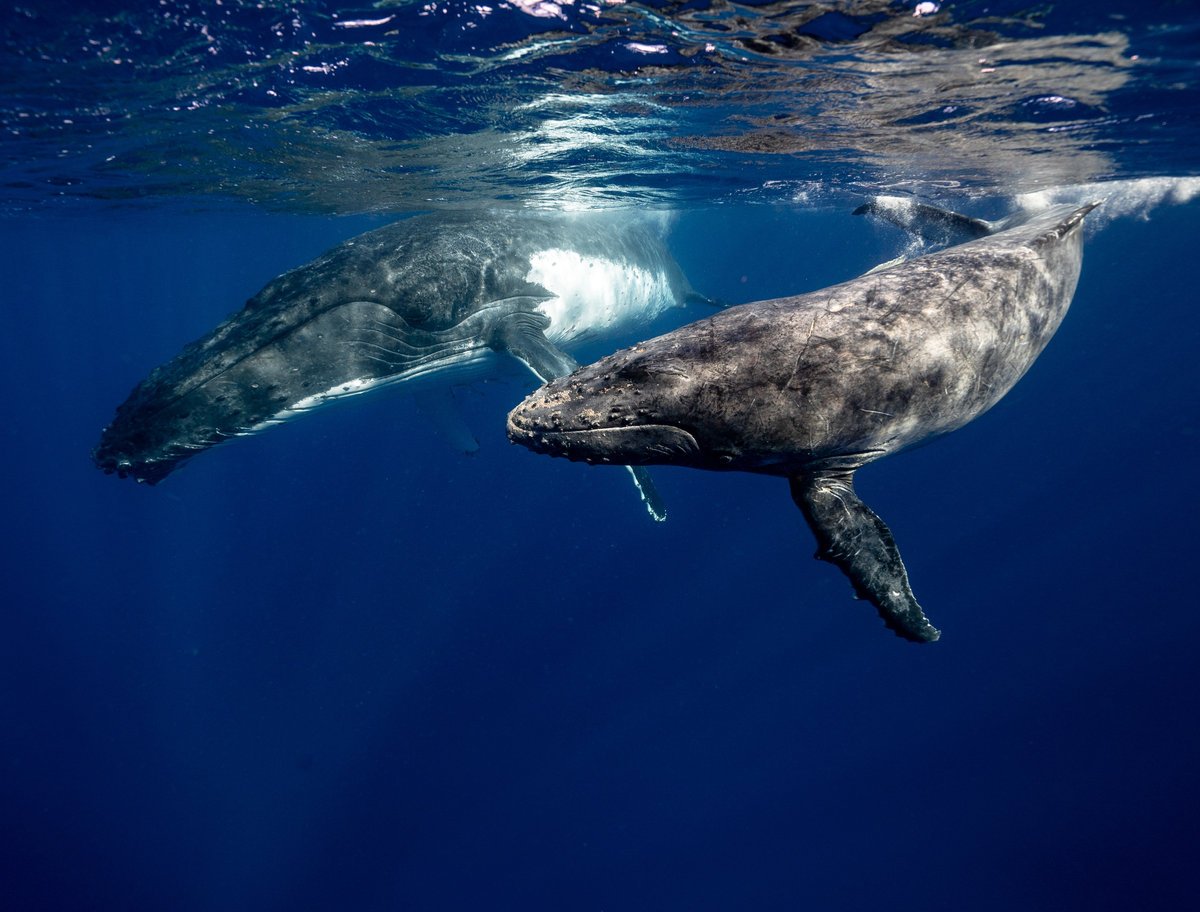
If you dream of getting as close as possible to whales, know that the waters of Reunion are a very privileged spot. As a result, many companies offer sea excursions to observe them in their natural environment. Even better, if you’re an adventurer, some clubs organize scuba diving trips to swim among the cetaceans. Whether it’s a rigid-hulled inflatable boat, a catamaran, or a glass-bottom boat, you’ll be spoiled for choice! You might also be joined by a group of dolphins. They love to play in the wakes of boats; for your greatest delight!
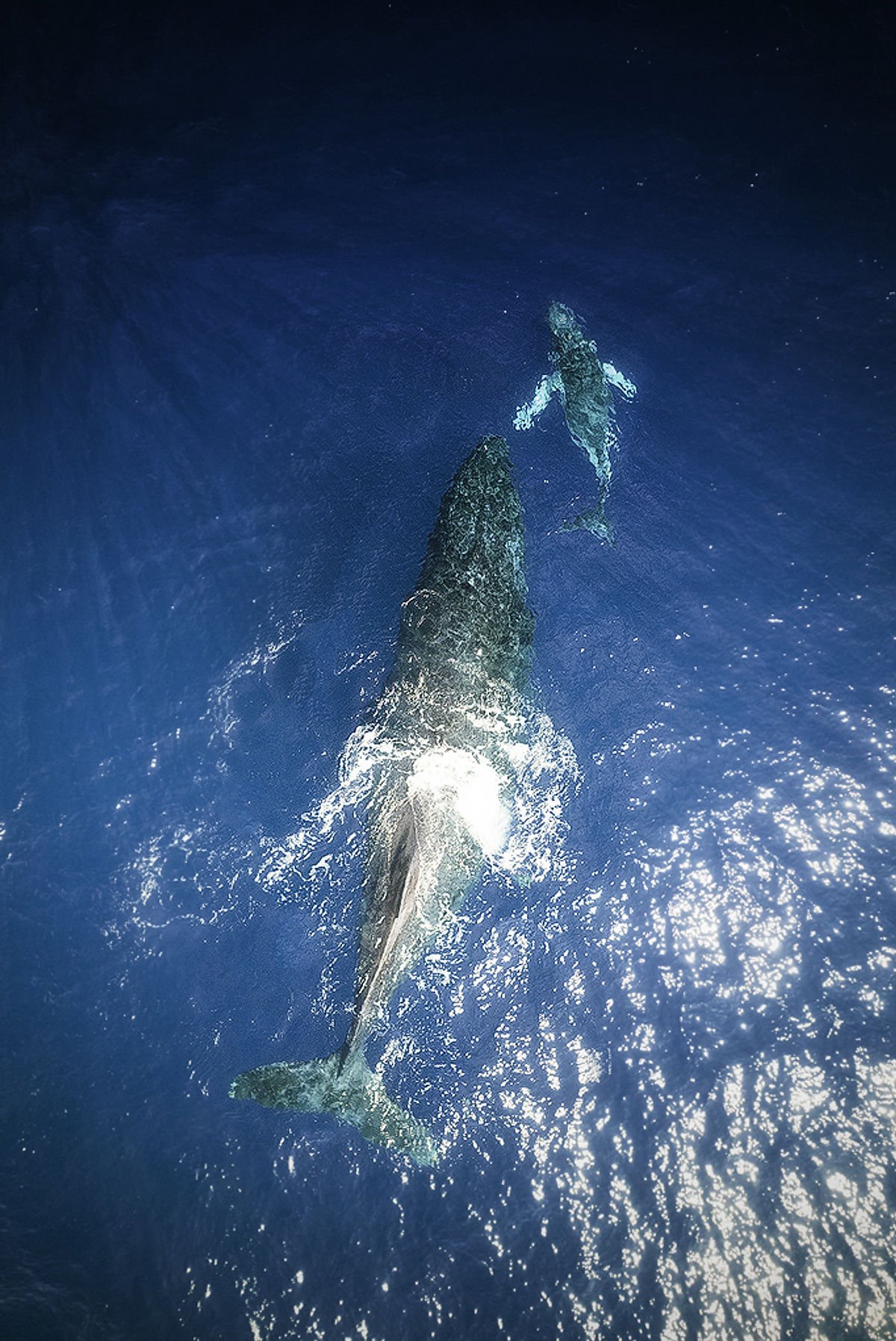
Some rules for observing whales in Reunion
Reunion Island is a protected area, so be aware that there are certain rules to follow when you decide to approach marine mammals – especially within the marine reserve. For the well-being and conservation of marine wildlife, the Reunion Charter for Responsible Approach and Observation of Marine Mammals and Sea Turtles has been in place for several years. Again, preference is given to O²CR certified providers. This label is reserved for all organizations committed to respecting current laws protecting marine species and their environment.
Some information about humpback whales:
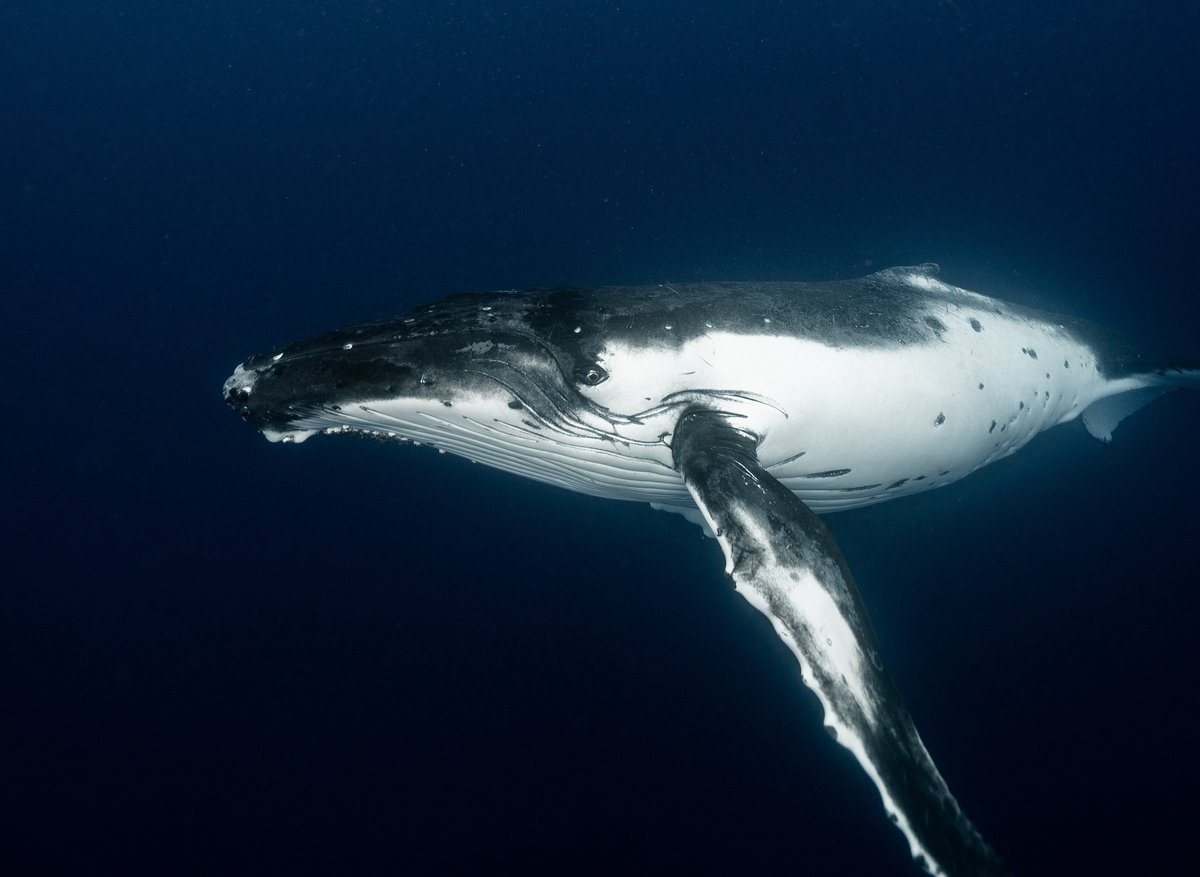
Although scientists know a lot about humpback whales, they are still unaware of many aspects of this species’ biology and behavior. For example, humpback whales generally travel in groups called “pods” and form “superpods” composed of hundreds of whales. Whales in these groups communicate with each other through clicks and whistles using an auditory system called the melon. They also communicate with sea lions and other cetaceans through physical contact, non-verbal communication, and postures indicative of their emotional states. Humpback whales can measure up to 14 m long and weigh up to 25,000 kg. They get their name from a discreet fatty mass located in front of the dorsal fin. It is a mammal with two pectoral fins that can occupy a third of the animal’s entire body, and the largest specimen measures 6 m.
The humpback whale is a freediving champion, notably due to the absence of gills since it belongs to the large family of mammals. Thus, when it dives, it holds its breath and must surface regularly to breathe. It can stay underwater for up to 30 minutes without breathing!
Humpback whales have a poor sense of smell and limited vision. However, they have extraordinary hearing and use echolocation to communicate, meaning they emit sounds and listen to their echoes to navigate in the water.
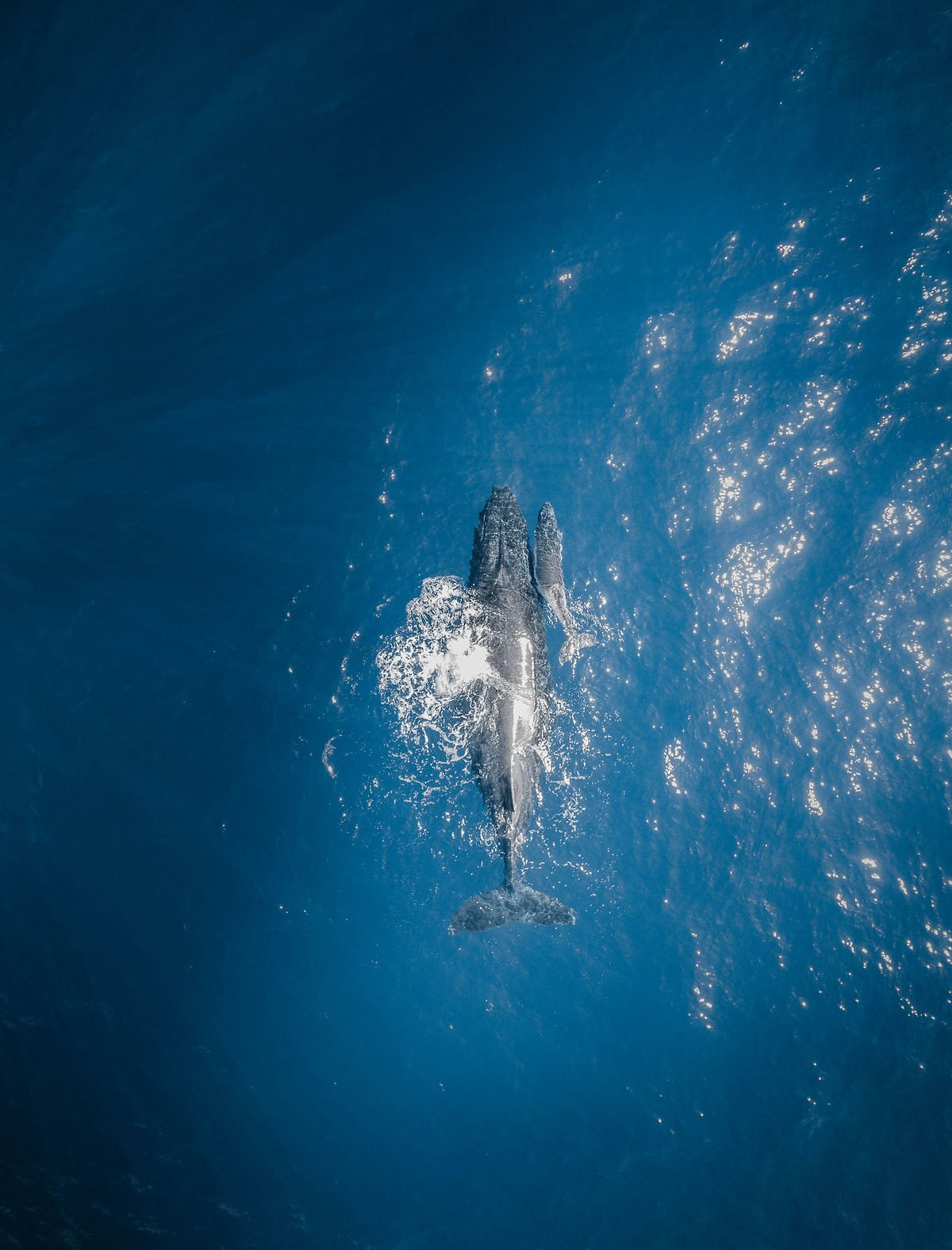
Where does its name “Humpback Whale” come from?
The humpback whale arches its back before diving, hence its name “humpback whale“. The hump can also refer to the dorsal fin itself, which covers the arch of the back when the whale prepares to dive.
Humpback whales are also characterized by their dark gray color and white belly. They live in all oceans of the Earth, but the species is most often observed in temperate zones, north and south of the equator. Their pectoral fins extend out to the sides, and their long, tusk-shaped nose are among the typical physical characteristics of this cetacean species. Their mouths are enormous and round, and there are between 270 to 400 dark baleen plates arranged on each side of the mouth. Baleen plates are horny plates that allow whales to feed on small prey. They act like a filter, allowing water to circulate but retaining larger nutrients, which get caught in the bristles.
Humpback whales in Reunion:
Humpback whales choose Reunion Island to give birth and nurse their young because this part of the Indian Ocean has warm waters with abundant food sources for the small mammals. They therefore come to our coasts to calve. They can generally be observed from July to October. Respecting the Charter and distances from cetaceans is essential to allow whales to feel the tranquility they seek and need during this particularly sensitive period. It is our individual responsibility to preserve the species from endogenous stress factors, and also so that they can always feel comfortable returning year after year.
The gestation period for these mammals is approximately 10 months; newborns become independent around three years of age. Hundreds of whales migrate from all over the world to Reunion National Park to mate and feed in this marine sanctuary… to our greatest delight!
Nursing of whales and calves:
Everyone knows that whales are mammals, but few know that whale calves nurse themselves, not by direct contact like other terrestrial mammals… To do this, a female whale squirts her milk when her calf is near her to suckle. Indeed, whale milk is rich in fat (50%). Consequently, the milk has a viscous texture and is insoluble in water. Thus, baby whales can grasp and consume the milk.
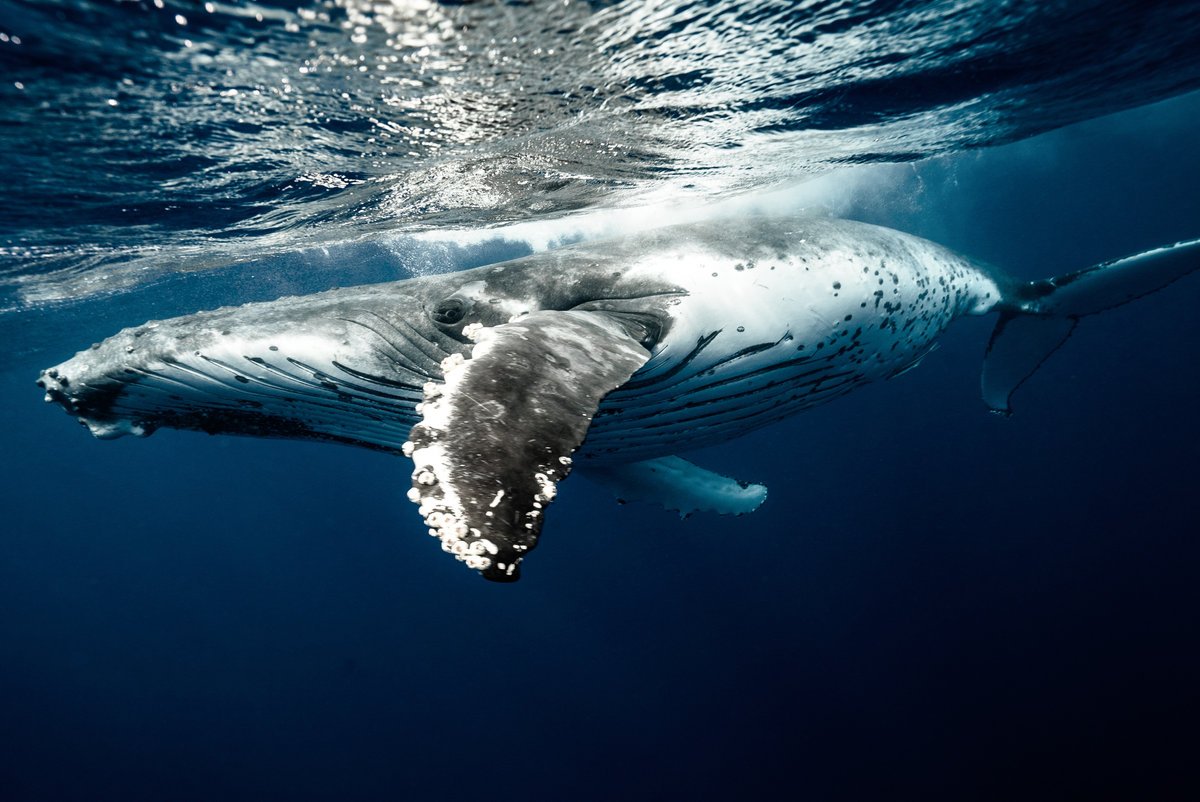
Book an activity in Réunion
Compare the best tours, boat trips, guided hikes, and activities in Réunion before booking.
This post is also available in:
 Français (French)