Difficulty: ++
Elevation gain: 500m
Scenic beauty: ++++
Piton de la Fournaise:
Piton de la Fournaise, at an altitude of 2,632 meters, is an active volcano on the island of La Réunion in the French overseas department and territory in the Indian Ocean. It corresponds to the summit and eastern slope of the Piton de la Fournaise massif, a shield volcano that constitutes 40% of the southeastern part of the island.
Piton de la Fournaise is one of the most active volcanoes on Earth: in terms of frequency of new eruptions (on average every nine months over the last decade), it is probably number one worldwide; calculated by the average quantity of lava ejected (estimated at 0.32 m3/s), its output is about 10 times lower than that of Kīlauea, but comparable to that of Etna. Since the installation of the Piton de la Fournaise Volcanological Observatory in 1979, Piton de la Fournaise has been one of the most monitored volcanoes in the world.
History of the volcano:
On September 21, 16??, the knight Andoche Dolnet de Palmaroux completed the first documented and written ascent. The descriptions of these places are quite poor, but according to Mr. Dornet, only one summit crater existed at the time.
Another expedition in October 1768 led to the discovery of Pas de Bellecombe, named after the island’s governor at the time, who joined the expedition but turned back in person before the passage was discovered. At least two accounts of this adventure are known, the first of which is very detailed, written by one of the main protagonists, the King’s Commissioner Honoré de Crémont, published in 1770, and his arrival at the top of the mountain is described here:
“We had barely walked 50 paces when we arrived on a small eminence from which we clearly saw the mouth of the Volcano at a great musket shot distance; I cannot express the joy I felt at having fulfilled, even beyond my hopes, the object of my journey: for I did not expect to see it so soon & so close. We remained on this small height to contemplate at leisure this furnace. It was about half past ten in the morning when we arrived; the weather was the finest in the world; the air was calm & the sky serene. The noise that struck our ears resembled that of 20 to 30 bellows of large forges…”
Hiking Piton de la Fournaise:
First of all, before undertaking this hike, check the weather conditions and the volcano’s activity, as Piton de la Fournaise is one of the most active volcanoes in the world, erupting several times a year. Therefore, you must ensure there are no ongoing eruptions to access the enclosure.
Piton de la Fournaise is one of the iconic places on La Réunion island, offering lunar landscapes. This place is magical, but rather than a grand description, it’s best to go there to see it with your own eyes.
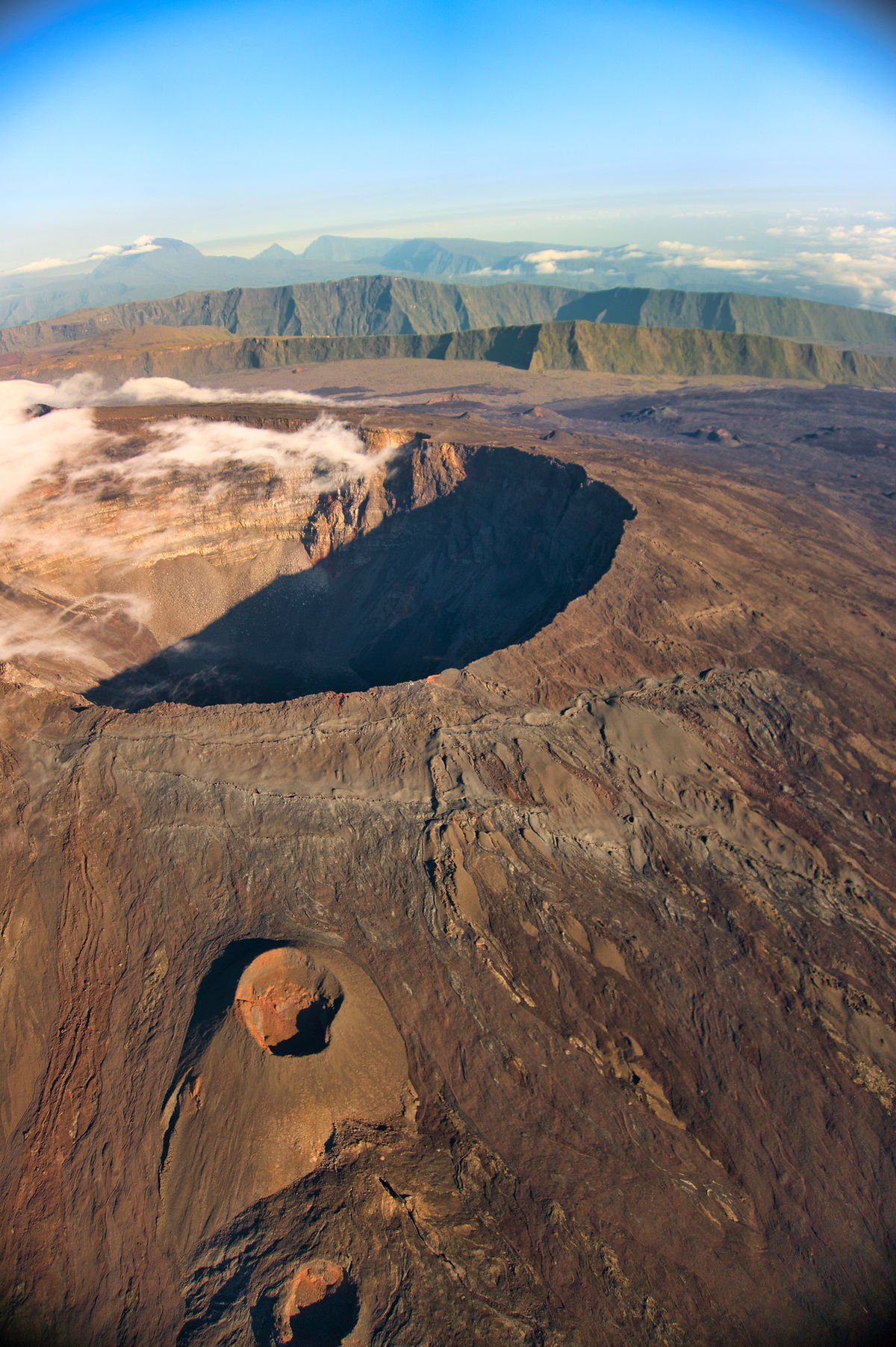
The objective of this hike is to reach the summit of the Dolomieu crater.
Formed in 1791, this crater experienced a collapse during the April 2007 eruption; indeed, during that event, the crater was completely filled with lava. The Dolomieu crater measures one kilometer in length, 750 meters in width, and approximately 350 meters in depth.
The hike to Dolomieu Crater
The hike to Piton de la Fournaise is an essential adventure for nature lovers and thrill-seekers. This active volcano on La Réunion island offers a unique lunar landscape, accessible to all who are well-prepared. Here is a detailed guide to undertaking this exceptional hike, enriched with practical advice and feedback.
Preparation
Before you set off, make sure you have good hiking shoes. The rocky and uneven ground requires appropriate gear to avoid injuries. Also, pack warm clothes, a raincoat, a backpack with water, food, snacks, sunglasses, a cap, and sunscreen. The weather can change quickly, so stay covered and remove layers as needed.
Departure
The hike begins at Pas de Bellecombe, a major access point. If you are leaving from Saint-Denis, allow about 2 hours of driving to get there. The ideal is to start early in the morning, around 7 AM, to benefit from the morning coolness and a clear view. The Bellecombe parking lot is free and offers services like a bar to refuel before and after the hike.
Itinerary
After passing through the metal gate marking the entrance to the Fouqué enclos (closed in case of eruption), you will descend towards the Formica Leo crater before starting on a marked path leading to the summit of Piton de la Fournaise. The climb is gradual but becomes more demanding as you approach the summit.
The Summit
At the summit, over 2600 meters above sea level, the Dolomieu crater awaits you. Take the time to admire this impressive natural spectacle, symbolizing the power of nature. It’s also the ideal moment for a picnic, respecting the Réunion tradition of the “volcano trail picnic.”
Practical Tips
Early start: Leaving very early allows you to avoid the intense heat of the day and the crowds. Moreover, the morning clarity offers better visibility and spectacular views.
Check the weather: Weather conditions at Piton de la Fournaise can change rapidly. Check the forecast before you go to avoid unpleasant surprises.
Bring enough water and food: There are no supply points along the way, so bring what you’ll need for the round trip.
Respect the environment: Piton de la Fournaise is a protected natural site. Keep all your waste with you and respect the local flora and fauna.
Night Experience
For an even more memorable experience, consider ascending at night. Guided by the moon and your headlamp, you will discover the volcano in a different light. However, this option requires additional preparation and great caution.
The hike to Piton de la Fournaise is undoubtedly challenging, but the efforts are largely rewarded by breathtaking views and the unique experience of walking on an active volcano. Whether you are an experienced hiker or an adventure enthusiast, this hike will remain etched in your memory as one of your most remarkable achievements.
You must go to the entrance of the enclos marked by a metal gate; if it is open, the enclos is accessible to the public; however, in case of an eruption, it will be closed and access prohibited. There is no particular difficulty up to this metal gate, then you must descend the steps to the Formica Leo crater; this first descent is simple and accessible.
I recommend doing this hike very early in the morning; indeed, as the weather is a bit fickle at Piton de la Fournaise, the conditions are more often favorable starting at sunrise.
The return journey follows the same route.
Choosing the Ideal Time for Your Hike in La Réunion
The best time to undertake this hike is a key element for an optimal experience. In La Réunion, the climate varies between dry and wet seasons, significantly influencing hiking conditions. To fully enjoy this adventure, it is recommended to plan your excursion during the dry season, which runs from May to November. During this period, the weather is generally milder, with less rainfall and pleasant temperatures, making the trails more accessible and the hike more comfortable. In addition, visibility is often better, allowing you to fully appreciate the breathtaking landscapes without being hampered by low clouds or fog. For more details on the best time to visit the island and plan your activities, consult our complete guide on when to go to La Réunion. This guide will provide you with valuable information to choose the ideal time for your hike, taking into account the weather conditions and seasonal specificities of the island.
Book an activity in Reunion Island
Compare the best excursions, boat trips, guided hikes, and activities in Reunion Island before you book.
This post is also available in:
 Français (French)