Réunion’s lagoon is the shallow marine area between the beaches and the coral reefs along the island’s coastline.
Some stretch for around 25 kilometers in total and are spread across several spots. They are about 100 to 500 meters wide. The largest is the Ermitage lagoon (opposite Ermitage Beach in the municipality of Saint-Paul), as well as the lagoons in the municipalities of Saint-Leu, L’Étang-Salé, and Saint-Pierre.
Réunion’s lagoon is a natural environment home to many animals and spectacular creatures—first and foremost, coral. In other words, marine biodiversity is extremely rich. Most of these lagoons are part of the Réunion Marine Nature Reserve and can therefore be protected.
Despite the small area they cover, coral reefs harbor extraordinary biodiversity (over 3,500 species) and form a unique natural heritage that must be respected and protected. The island’s marine biodiversity also rivals that of its neighbors, showing that the Mascarene Islands rank among the world’s 10 biodiversity “hotspots”.
Réunion’s lagoon:
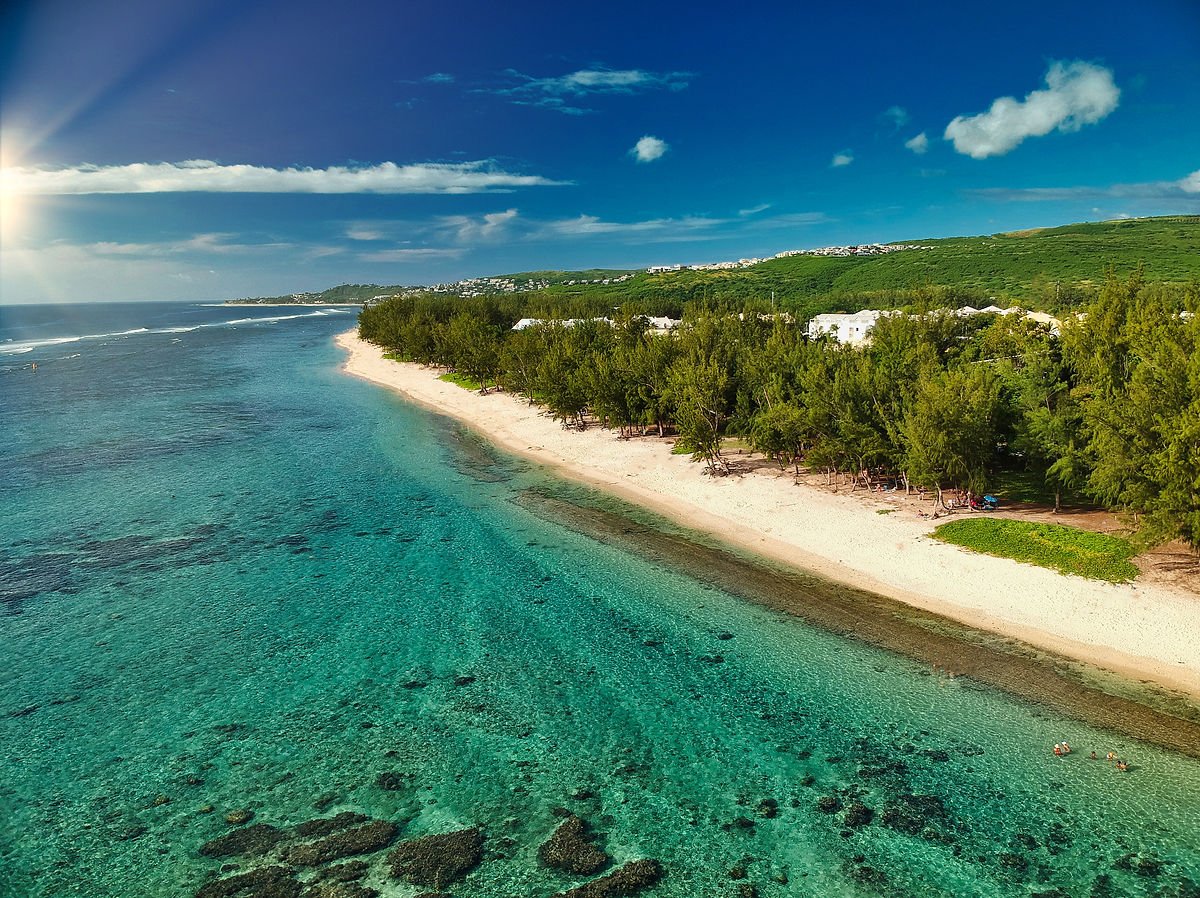
Réunion’s west coast is a lagoon with warm, crystal-clear waters all year round.
Réunion’s lagoon is family-friendly, paradise-like, and safe, stretching for over 12 kilometers along the island’s west coast from l’Hermitage to Saint-Leu. It is protected by a huge coral reef that acts as a natural barrier against the Indian Ocean’s swells.
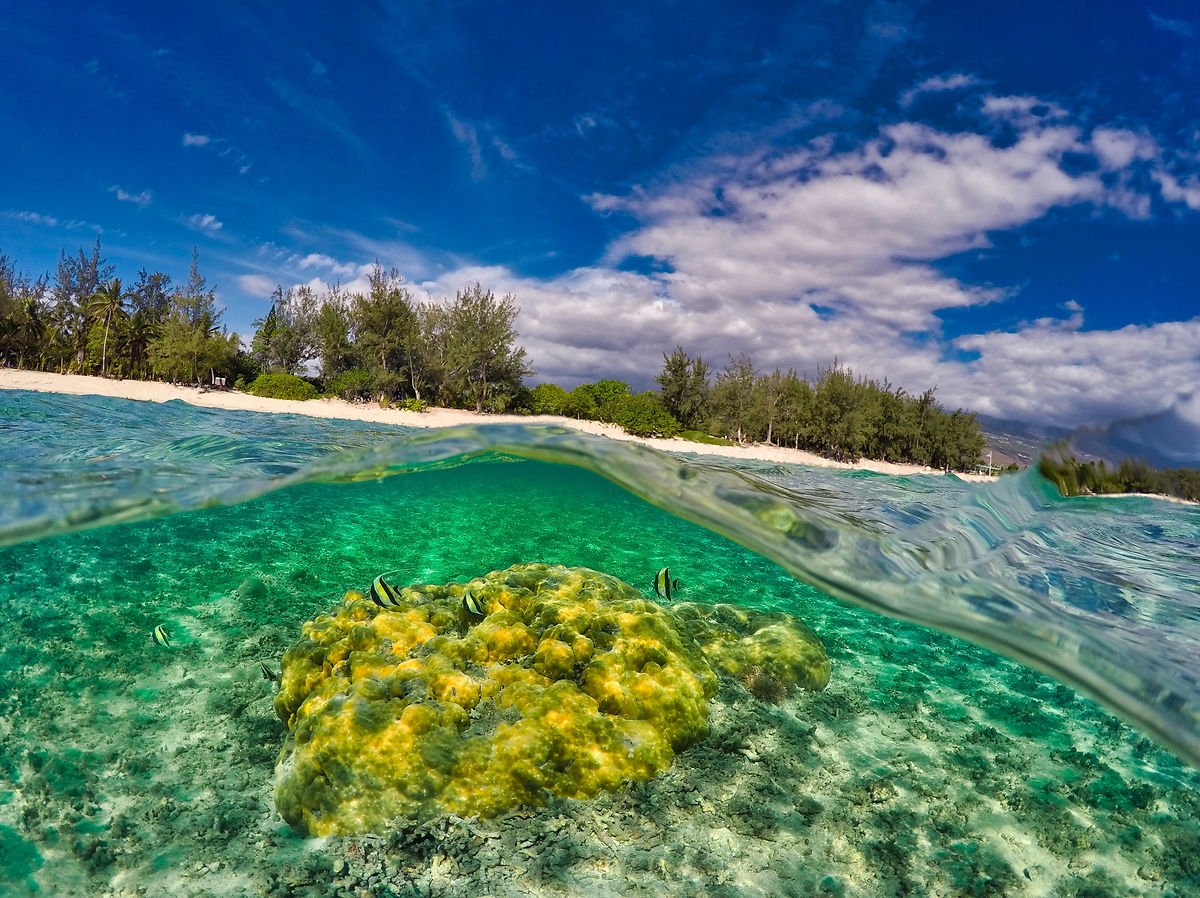
It is dotted with coral down to a depth of no more than 2 meters and is home to hundreds of fish species you can spot with fins, mask, and snorkel. A life-size aquarium, with water temperatures between 23° and 29° depending on the season.
In the lagoon, enjoy sunny beaches with family, as a couple, or with friends—and ideal conditions for safe swimming all year round in Réunion.
The hottest month for beaches, relaxing, and swimming is January. Be careful: January is cyclone season, with heavy rain, but other periods are also possible. The coolest month is August, if you can’t handle the heat. The driest month of the year is September, if you really don’t like rain at all.
On the horizon, sky and sea blend into a vast blue expanse. The whole family enjoys the water and shares special moments together in an idyllic setting.
Let’s cross the coral reef. Here we are out in the open sea, but still within the Réunion Marine Nature Reserve, which stretches from Cap La Houssaye in Saint-Paul to La Roche aux Oiseaux in L’Étang-Salé, covering more than 40 kilometers of coastline. This is the realm of cetaceans. On board, everyone was fascinated by the majestic humpback whales, which migrate during the austral winter and come very close to Réunion’s shores. Going a little farther out, the dolphins’ energy and playfulness delighted the crew throughout the day. Seeing these extraordinary mammals, so at ease, will stay with you for a long time.
Feel like diving? It’s an exceptionally rich world that has evolved beneath the surface of the Indian Ocean. Scuba diving lets you fully immerse yourself in an ecosystem that is both magical and fragile.
From the secret caves of Boucan Canot to the magnificent corals of Cap La Houssaye, you’ll marvel at this weightless tour with triggerfish, rays, and turtles.
Réunion is an island like no other—fascinating both on land and under the sea—where divers will find stunning drop-offs, coral barriers, powerful currents, historic wrecks, and incredible underwater architecture. But beyond the seascapes, diving in Réunion also lets you observe rich, diverse marine life.
For younger visitors or the less adventurous, head back into the lagoon to watch brightly colored tropical fish with fins, mask, and snorkel. From l’Ermitage to La Saline-les-Bains, snorkeling is a free, family-friendly, practical, and fun activity that will leave unforgettable memories for kids and adults alike.
The marine reserve:
Réunion’s coral reefs boast extraordinary biodiversity and form an exceptional natural, scenic, and cultural heritage that contributes to the well-being of Réunion residents and occasional visitors. However, since the late 1970s, these natural environments have been damaged and, in some areas, severely degraded. This degradation is linked to global climate change, but also to certain local human activities that could significantly impact the balance of coral reefs.
That’s why, in 2007, a marine nature reserve was created, stretching for 45 kilometers from Cap La Houssaye in Saint-Paul to La Roche aux Oiseaux in L’Étang-Salé. The reserve covers 35 square kilometers and is organized around three types of zones: general area, reinforced protection (50%), and full protection (6%).
Book an activity in Réunion
Compare the best tours, boat trips, guided hikes, and activities in Réunion before booking.
This post is also available in:
 Français (French)